
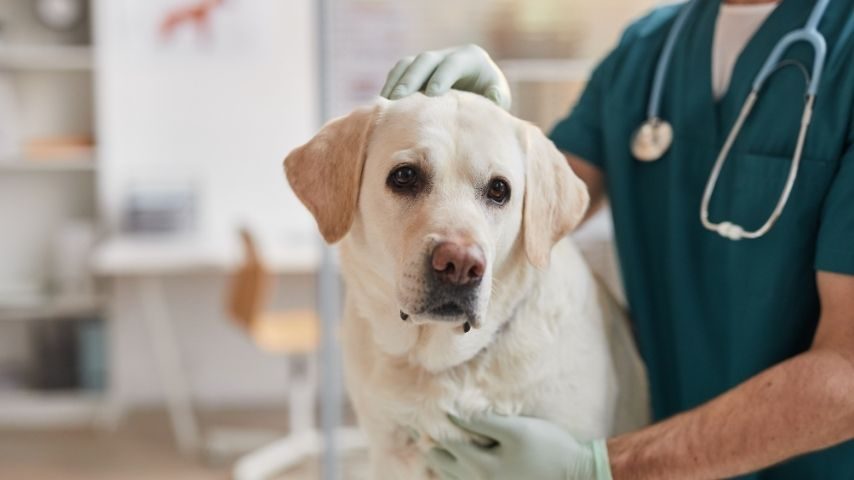
Cooperative Care and Low Stress Handling
Why It Matters in Everyday Canine Behaviour Veterinary Practice
As part of Canine Behaviour Month, Dr Julie Ashton explores how low-stress handling and cooperative care can improve patient welfare, enhance safety, and support better clinical outcomes in veterinary practice.
Veterinary visits can be stressful for our patients.
For many animals, entering the clinic means unfamiliar people, different smells, strange sounds, restraint, and procedures they do not understand. While some level of stress may seem unavoidable, the way we handle our patients has a significant impact on both their welfare and clinical outcomes.
Stress is not just an emotional state, it has physiological consequences. When an animal is fearful – stress hormones such as cortisol and adrenaline rise. This can affect wound healing, suppress immune function, alter appetite, disrupt sleep, and increase pain sensitivity. Chronic or repeated stress can also contribute to learned fear of the veterinary environment, making each future visit harder for the patient, owner, clinical team and in some cases unsafe.
Low stress handling is an approach that aims to reduce fear, anxiety, and frustration during veterinary care.
It is not about avoiding necessary procedures, but about how we perform them. Small changes can make a big difference. Every clinic can implement low stress principles, regardless of size or budget. There are often small things we can do that make a big difference. Creating quieter waiting areas, reducing noise where possible, using non-slip flooring, and providing species-specific spaces can all help. Cats benefit from raised platforms and covered carriers; dogs often cope better with space from other animals. Even simple measures such as pheromone use, soft bedding, avoiding harsh smells and dimmer lighting can reduce arousal.
How we approach handling patients also makes a big difference. Can the dog stay on the floor rather than being lifted? Can the cat remain in the bottom half of its carrier? We should be noticing how patients react when we do different things and change our approach accordingly. These adjustments often improve both patient cooperation and staff safety.
Have you ever seen a video of a zoo animal presenting a leg for a blood draw? Or lying on an X-ray plate? This is cooperative care – where we teach animals to actively participate in their own care. It involves training predictable routines and giving the animal a degree of control, something, we know that is super important to help reduce stress.
Examples include teaching a chin rest for blood draws, standing still for injections, or voluntarily presenting a paw for nail trims. The key difference is consent and predictability, the animal understands what is happening and has a way to communicate if they need a break. They have a way of saying ‘no thank you’ so hopefully don’t have to use aggression to get their point across.
In practice, low stress handling and cooperative care work best together.
Low stress handling helps us in the moment, reducing stress during today’s appointment. Cooperative care builds long-term trust, making future care easier. Together, they create safer, more efficient consultations and better patient experiences.
Of course, some patients are too fearful, painful, or overwhelmed to learn effectively in the clinic environment. This is where pre-visit pharmaceuticals can be invaluable.
Pre-vet visit medication should be considered when an animal has a history of significant fear, panic, aggression, or when distress would compromise welfare or diagnostics. These medications are not a ‘last resort’, they are a proactive welfare tool. Used appropriately, they can lower arousal, improve the patient’s ability to cope, and allow the team to work more safely and effectively.
Ultimately, good veterinary care is not just about what we do, but how our patients experience it. By combining low stress handling, cooperative care, and thoughtful use of medication, we can improve welfare, clinical outcomes, and strengthen trust in the veterinary experience.
Want to know more, listen to our FREE CPD with Dr Julie Ashton on Cooperative Care, Low-Stress Veterinary Visits.
Written by Dr Julie Ashton, BSc (Hons) BVSc, MANZCVs (Veterinary Behaviour). CCAB MRCVS. Veterinary Behaviourist – Life on Four Legs


